
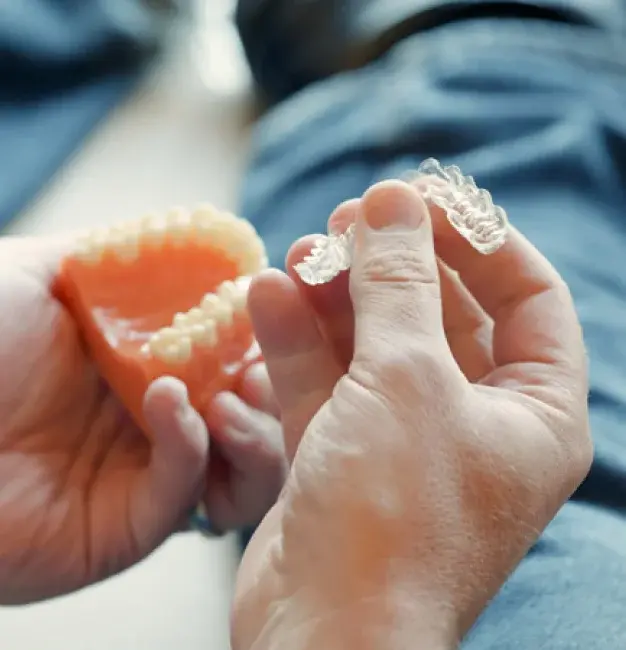
Comfortable Protection for Teeth Grinding
Teeth grinding and jaw clenching can place significant pressure on the teeth, particularly when these habits occur during sleep. Since night time grinding often happens without conscious awareness, many people may not realize they are doing it until they experience tooth sensitivity, worn enamel, jaw tension, morning headaches, or damage to existing dental work. Over time, repeated pressure can contribute to additional wear and discomfort.
At LifeSmiles Dentistry, we can evaluate signs associated with nighttime grinding and determine whether a custom night guard may be appropriate for your needs. A properly fitted oral appliance creates a protective barrier between the upper and lower teeth, helping reduce direct contact while you sleep. With consistent use, a night guard can be part of an ongoing approach to protecting your teeth from the effects of bruxism.
Signs You May Benefit from a Night Guard
Bruxism, the clinical term for teeth grinding or clenching, can occur while you are awake or asleep. Sleep bruxism can be particularly difficult to recognize because it happens when you are not consciously aware of the behavior.
A night guard may be worth discussing with our team if you experience:
- Teeth that appear flattened, chipped, or unusually worn
- Increased tooth sensitivity without an obvious cause
- Jaw soreness or tightness in the morning
- Frequent headaches after waking
- Facial or muscle discomfort around the jaw
- Frequent nighttime clenching or grinding
- Damage to fillings, crowns, or other dental restorations
- A partner who notices grinding sounds while you sleep
Why a Custom Fit Makes a Difference
A professionally fitted night guard is designed to match the shape of your teeth and bite, providing a more secure and personalized fit than many store-bought options. A well-fitted guard can help protect against enamel wear, chipped teeth, and damage to fillings or other dental restorations while reducing direct pressure between the teeth during sleep.
Custom materials are selected to support durability and regular use, while the personalized design can help minimize unnecessary movement or discomfort. Because a night guard is intended to be worn consistently, having an appliance that fits comfortably can make it easier to incorporate protection into your nightly routine and ongoing oral care.
Getting Fitted for Your Night Guard
A night guard should fit securely and comfortably to provide effective protection. LifeSmiles Dentistry can evaluate your teeth, bite, and symptoms before recommending an appropriate appliance.
Evaluate Your Symptoms
We begin by discussing symptoms such as tooth wear, sensitivity, jaw discomfort, headaches, or known nighttime grinding. This helps us understand how bruxism may be affecting your oral health.
Examine Your Teeth and Bite
Our team evaluates your teeth and bite for signs of excessive wear, damage, or other concerns. We may also assess existing restorations and areas that experience increased pressure.
Determine the Appropriate Appliance
If a night guard is recommended, we can determine the type of appliance and fit that best suits your needs. The goal is to provide protection while maintaining comfort during sleep.
Create Your Custom Night Guard
Measurements or dental impressions are used to create an appliance designed specifically for your smile. A custom fit helps the night guard remain properly positioned while you sleep.
Check the Fit
Once the appliance is ready, we check its fit and make adjustments when needed. We also explain how to wear, clean, store, and care for the night guard.
Caring for Your Night Guard
Proper care can help keep your night guard clean, comfortable, and functional over time. After removing the appliance, rinse it with cool or lukewarm water and follow the cleaning instructions provided by LifeSmiles Dentistry. Allow it to dry completely before placing it in its protective case. Avoid hot water, as high temperatures may affect the shape and fit of the appliance. Store your night guard safely away from pets and children when it is not being worn.
Bring the appliance to regular dental appointments so its condition and fit can be evaluated along with your teeth and restorations. If your night guard becomes damaged, loose, uncomfortable, or difficult to wear, contact LifeSmiles Dentistry for guidance rather than continuing to use an appliance that no longer fits properly.
Protect Your Teeth While You Sleep
Night time grinding and clenching can gradually affect teeth, restorations, and comfort without you realizing it. If you have noticed signs of bruxism or have been told that you grind your teeth while sleeping, LifeSmiles Dentistry can evaluate your smile and discuss whether a custom night guard is right for you. Call us at 231-775-8281 to schedule your appointment.
Frequently Asked Questions
About Night Guards
Common signs include waking up with jaw soreness or headaches, noticing flattened or chipped teeth, or being told by a partner that you grind your teeth at night.
Yes. Custom night guards are molded to fit your bite precisely, offering better protection, comfort and durability compared to generic, one size fits all versions.
With proper care, a custom night guard typically lasts several years, though regular checkups help monitor wear and determine when a replacement is needed.
Most patients adjust quickly to a custom fitted night guard, since it is molded specifically to the shape of their teeth for a comfortable, secure fit.
A night guard does not stop the grinding reflex itself, but it protects teeth from the physical damage that grinding can cause.
Rinse it after each use and clean it regularly with a soft brush and mild soap, storing it in a protective case when not in use.
Teeth grinding can be caused by stress, misaligned teeth, sleep disorders or an abnormal bite, though it is common for the exact cause to vary by patient.
Yes. By reducing the pressure placed on teeth and the jaw during grinding, a night guard can help ease associated jaw tension and discomfort.